
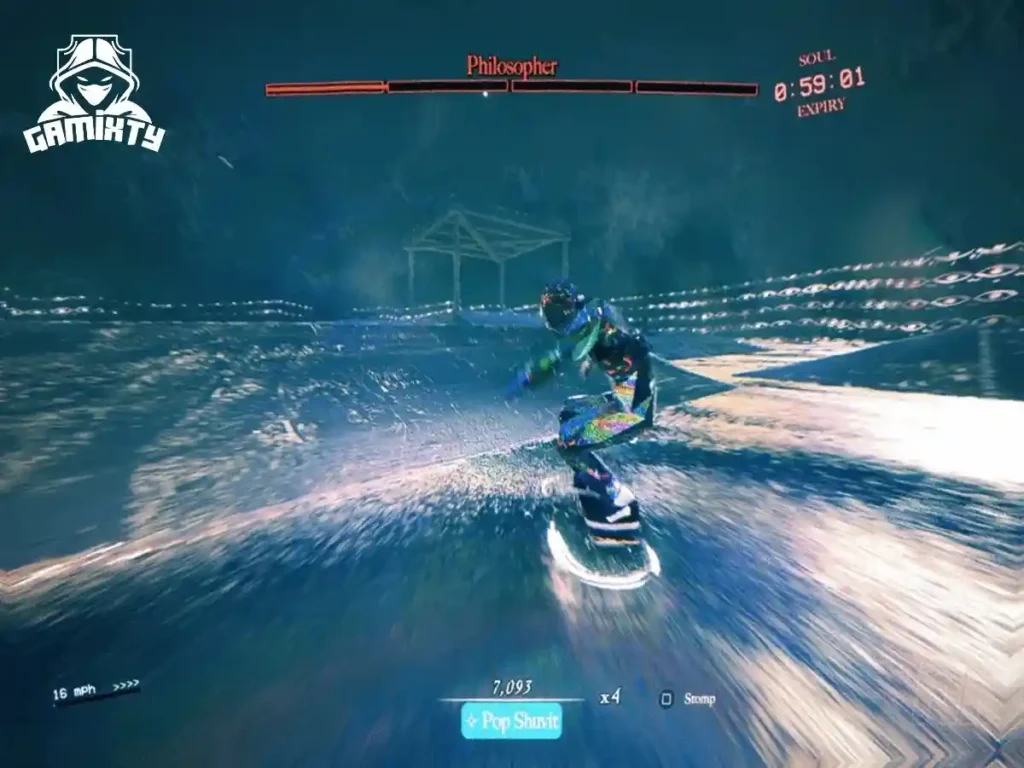
Skate Story is not a typical skateboarding game, and it never tries to be one. Developed by Sam Eng and published by Devolver Digital, this indie title blends technical skateboarding mechanics, dark fantasy storytelling, and experimental art design into a single, unforgettable experience. Instead of chasing high scores in familiar skate parks, players descend into a surreal underworld where every kickflip, grind, and landing carries emotional and mechanical weight.
At its core, Skate Story is about movement, persistence, and mastery. You play as a fragile being made of glass and pain, skating through hell itself. The game challenges not only your reflexes but also your patience, asking you to learn momentum, balance, and timing in a world that actively resists you. This makes Skate Story feel less like a traditional sports game and more like an interactive piece of art built around skateboarding.
About Skate Story
- Developer: Sam Eng
- Release Date: December 8, 2025
- Genre: Adventure, RPG, Sports
- Platforms: PC, PlayStation 5, Nintendo Switch 2
- For Game Trailer: Click Here
Overview: A Strange Mission in a Broken World
Skate Story presents a premise that feels both simple and surreal. You control a demon forged from glass, trapped in the underworld by The Devil’s bargain. Your task is almost absurd in its ambition: skate to the moon and eat it in order to earn your freedom. This idea sounds strange on paper, but within the game’s dreamlike logic, it feels natural and meaningful.
The journey takes place in a desolate realm known as The Emptylands, a hellish space filled with ash, smoke, broken concrete, and impossible architecture. Skateboarding is not just a means of travel here; it is survival. Every surface, slope, and rail becomes part of the challenge, forcing players to engage deeply with the game’s physics and movement systems.
Rather than relying on long cutscenes or heavy exposition, Skate Story tells its story through atmosphere, mechanics, and subtle interactions. The narrative unfolds slowly, encouraging players to reflect on failure, repetition, and the effort required to improve.
Core Gameplay: Skateboarding Built on Physics and Precision
Realistic Skateboarding Mechanics
One of the strongest aspects of Skate Story is its commitment to authentic-feeling skateboarding physics. This is not an arcade-style experience where tricks happen automatically. Instead, the game focuses on:
- Weight distribution
- Speed control
- Momentum preservation
- Precise timing
Every trick requires intention. If you approach a jump too slowly, you won’t clear it. If your balance is off during a grind, you’ll shatter. This makes Skate Story feel closer to real skateboarding than many mainstream skate games, even though the setting is entirely fantastical.
Early in the game, movement feels awkward and unforgiving. This is intentional. The developers want players to struggle at first, to fall, and to fail. Over time, as you understand how the board reacts to slopes, edges, and speed, movement becomes smoother and more expressive. This progression feels earned rather than given.
From Beginner to Skilled Skater
Skate Story does an excellent job of reflecting real skill development. In the beginning, even basic tricks feel risky. Your glass body shatters often, reinforcing the idea that you are fragile and inexperienced. As you practice, muscle memory builds, and complex trick chains become possible.
This transformation is one of the game’s greatest strengths. The player does not simply unlock power through upgrades; instead, the player themselves improves. By the end of the game, movements that once felt impossible become second nature, creating a strong sense of personal achievement.
Combat on Four Wheels: When Tricks Become Weapons
Skate Story introduces a unique combat system that is fully integrated into skateboarding. Instead of traditional attacks, combat revolves around trick execution and combo management. Enemies take damage when you land tricks or complete combo chains, turning skateboarding itself into a form of combat.
For example, a clean grind followed by a precise landing can weaken enemies, while maintaining momentum allows you to chain attacks efficiently. This system rewards players who skate smoothly and think ahead, rather than button-mashing.
Combat encounters feel like rhythmic challenges, where flow matters more than aggression. If you lose speed or mistime a trick, you leave yourself vulnerable. This design reinforces the game’s central theme: progress comes through patience and mastery, not brute force.
The Emptylands: Atmosphere, Mood, and World Design
A Hell That Feels Alive
The world of Skate Story is haunting and memorable. The Emptylands are not just a backdrop; they actively shape how the game feels. Ash drifts through the air, concrete surfaces pulse and weep, and strange geometric structures stretch into the distance. The environment feels unstable, as if it could collapse at any moment.
This oppressive setting contrasts beautifully with the elegance required for skateboarding. The smoother you skate, the more you stand out against the harsh world around you. This contrast gives every successful run a sense of beauty and defiance.
Environmental Storytelling
Rather than explaining everything directly, Skate Story uses environmental storytelling. You encounter strange characters along the way, including forgotten souls, talking animals, and broken creatures who have accepted their fate. These interactions are brief but meaningful, adding emotional depth to the journey.
The underworld feels layered, with each area suggesting a different stage of suffering or resignation. Through visuals alone, the game communicates themes of punishment, repetition, and endurance.
Visual Style: Fragility Made Visible
Skate Story’s visual identity is one of its most striking features. The protagonist’s body is made of translucent glass, reflecting and refracting the environment. When you crash, the shattering effect is both visually impressive and emotionally impactful.
The art direction reinforces the game’s themes:
- The glass demon looks beautiful but fragile
- Environments feel hostile and unstable
- Visual distortions create a dreamlike, unsettling mood
Screen filters, VHS-style glitches, and camera effects enhance the surreal feeling, though they may be intense for some players. Still, these choices are intentional, designed to make the player feel slightly uncomfortable—much like the world the character inhabits.
Progression, Challenges, and Side Content
Structured Yet Open Progression
Skate Story balances linear progression with optional exploration. While the main goal is always clear, players are encouraged to take detours, help other characters, and attempt optional challenges. These side activities often require specific tricks or precise movement, pushing players to improve their skills.
Completing these challenges provides upgrades and abilities that make future sections more manageable. This creates a satisfying loop where effort leads to growth, and growth opens new possibilities.
Difficulty That Feels Fair
The game is challenging, but rarely unfair. Most failures are the result of poor timing or misjudged momentum rather than random obstacles. This design encourages learning instead of frustration. When you fail, you usually understand why, and that understanding motivates another attempt.
Audio Design and Immersion
Sound plays a critical role in Skate Story. The scrape of wheels against concrete, the snap of the board during tricks, and the echoing ambience of The Emptylands all provide feedback that helps players refine their timing.
Music complements the gameplay without overpowering it. Instead of syncing every action to the soundtrack, the music supports mood and rhythm, allowing players to focus on movement and flow.
On PlayStation 5, DualSense haptic feedback adds another layer of immersion. Subtle vibrations reflect surface changes and landings, making movement feel more physical and grounded.
Performance and Technical Aspects
Skate Story runs smoothly on modern systems and maintains stable performance during intense sequences. However, some players may notice occasional physics glitches or camera issues, especially during fast-paced sections. These moments are rare but noticeable.
The game’s visual effects can also cause motion discomfort for sensitive players. Fortunately, several settings allow players to adjust camera distance and effects, though the experience remains visually intense by design.
System Requirements for Skate Story
| Requirement | Minimum | Recommended |
| Operating System | Windows 10 (64-bit) | Windows 11 (64-bit) |
| Processor | Intel Core i7-6700 / AMD Ryzen 5 1600 | Intel Core i7-1070 / AMD Ryzen 7 2700X |
| Memory (RAM) | 8 GB RAM | 16 GB RAM |
| Graphics Card | GeForce GTX 1050 Ti / Radeon RX 570 / Intel Arc A380 | GeForce RTX 2070 / Radeon RX 5700 / Intel Arc A750 |
| DirectX | Version 12 | Version 12 |
| Storage Space | 12 GB available space | 12 GB available space |
Pros and Cons of Skate Story
Pros
- Unique and original indie concept
- Authentic skateboarding mechanics
- Integrated combat system
- Stunning visual design and art direction
- Immersive sound and haptic feedback
Cons
- Motion and visual effects may cause discomfort for some players
- Short main storyline (~5 hours)
- Cannot revisit previous skate spots without restarting
Despite these minor issues, Skate Story excels in creativity, challenge, and presentation.
Final Verdict: Is Skate Story Worth Playing?
Skate Story is a bold and thoughtful game that treats skateboarding as more than a sport. It becomes a language of movement, failure, and growth. Through its physics-driven mechanics, haunting world, and symbolic narrative, the game offers an experience that feels personal and rewarding.
For players who enjoy challenging gameplay, artistic presentation, and meaningful progression, Skate Story is absolutely worth playing. It may not be perfect, but its ambition and execution make it one of the most unique indie skateboarding games in recent years.