
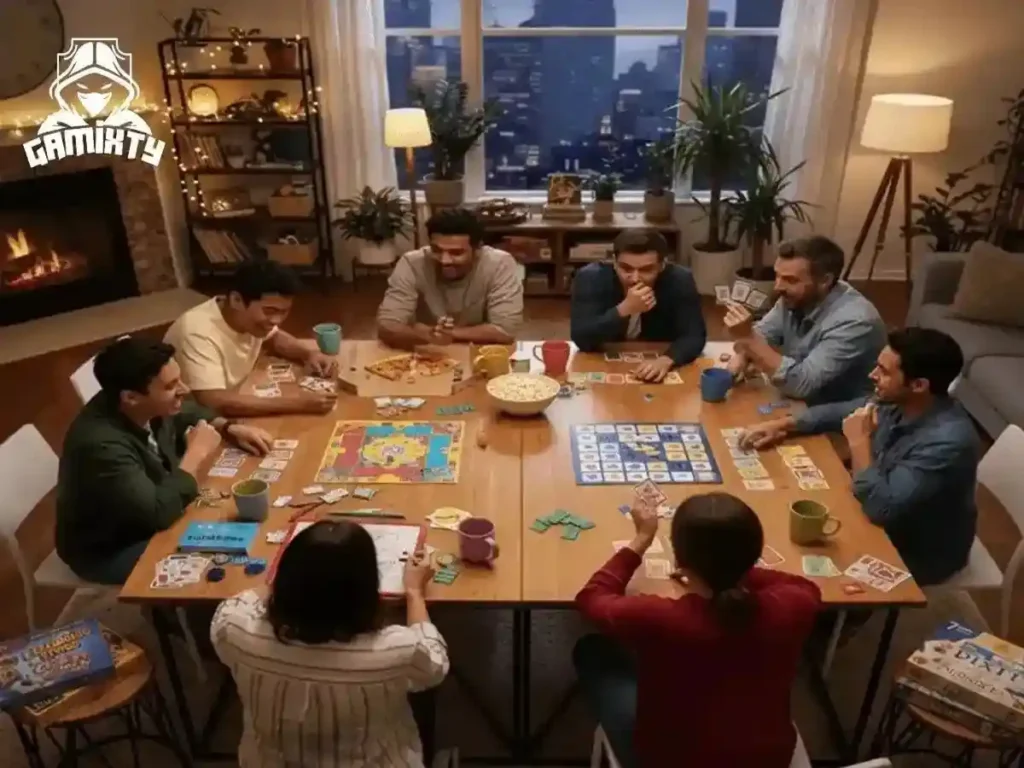
Playing board games with a large group is one of the best ways to bring people together. Whether it’s a family game night, a party with friends, or a weekend gathering, games that accommodate eight players create laughter, excitement, and friendly competition. However, finding games that are easy to learn, engaging, and fun for multiple participants can be tricky.
In this guide, we’ll explore the best board games for 8 players, covering a mix of strategy, creativity, and party games. Each game includes an introduction, reasons to play, pros and cons, recommended playtime, player range, and age suitability, helping you pick the perfect game for your next gathering.
Best Board Games for 8 Players
Here’s a detailed look at the ten best board games for 8 players that bring fun, strategy, and creativity to your game nights.
1. Codenames
Players: 4–8
Playtime: 15–30 minutes
Recommended Age: 14+
Game Type: Party, Word Game
Codenames is a team-based word game that challenges players to identify secret words using one-word clues provided by a spymaster. The game features a grid of word cards, and each team must guess their own words while avoiding the opposing team’s words and the deadly black card. With eight players, two teams of four can compete, creating an interactive and lively experience. Each round offers new challenges, requiring creative thinking and clever communication.
Why Play This Game:
Codenames encourages teamwork, strategic thinking, and creativity. With larger groups, the excitement increases as each guess can completely change the game’s outcome.
Pros:
- Perfect for large groups
- Simple rules and quick setup
- Promotes communication and creative thinking
Cons:
- It can be challenging for younger players
- Some clues may be too abstract
2. Telestrations
Players: 4–8 (expandable)
Playtime: 30 minutes
Recommended Age: 8+
Game Type: Party, Drawing Game
Telestrations is a fun drawing-and-guessing game similar to a visual game of telephone. Each player draws a word or phrase in a sketchbook, passes it along, and the next player guesses what it is. By the time it returns to the original player, the results are often hilarious and unexpected. Telestrations is easy to learn and suitable for both families and adult parties.
Why Play This Game:
It encourages creativity, laughter, and group interaction, keeping everyone entertained from start to finish.
Pros:
- Fun for all ages
- Endless replay value
- Encourages laughter and creativity
Cons:
- Can be slow if players overthink drawings
- Less suitable for competitive strategy gamers
3. Werewolf
Players: 8+
Playtime: 10–30 minutes
Recommended Age: 10+
Game Type: Social Deduction
Werewolf is a social deduction game where players take on secret roles as villagers or werewolves. Villagers aim to identify the werewolves before being eliminated, while werewolves try to stay hidden. The game thrives on discussion, bluffing, and observation, making it engaging for larger groups.
Why Play This Game:
It promotes strategic thinking, social interaction, and keeps everyone involved, making each round suspenseful and exciting.
Pros:
- Highly interactive
- Perfect for large groups
- Encourages critical thinking and strategy
Cons:
- It can feel intense or stressful for some players
- Requires active participation
4. Sushi Go Party!
Players: 2–8
Playtime: 15–30 minutes
Recommended Age: 8+
Game Type: Card Drafting, Strategy
Sushi Go Party! is a fast-paced card-drafting game where players collect sushi dishes to earn points. The game is colourful, dynamic, and strategic, with up to eight players creating a competitive environment as they anticipate each other’s moves.
Why Play This Game:
It encourages quick decision-making, friendly competition, and strategic planning while remaining easy to learn and visually appealing.
Pros:
- Short, fun rounds
- Suitable for kids and adults
- High replay value
Cons:
- Can feel repetitive after multiple rounds
- Less interactive than social deduction games
5. Spyfall
Players: 3–8
Playtime: 15–30 minutes
Recommended Age: 12+
Game Type: Social Deduction
Spyfall is a hidden-role game where one player is the spy trying to guess the location known to others. Players ask and answer questions without revealing the location. Each round becomes unpredictable and exciting, especially with a full group of eight players.
Why Play This Game:
Spyfall sharpens deduction skills, encourages bluffing, and keeps everyone engaged with fast-paced rounds.
Pros:
- Quick and dynamic gameplay
- Ideal for parties
- Easy to learn
Cons:
- Can be confusing for first-time players
- Dominant players may control questioning
6. 7 Wonders
Players: 3–8
Playtime: 30–45 minutes
Recommended Age: 10+
Game Type: Strategy
7 Wonders is a strategy game where players develop civilisations by collecting cards for resources, military power, and scientific achievements. Each decision impacts the overall game, creating a challenging experience for larger groups.
Why Play This Game:
It provides strategic depth, multiple ways to win, and engaging gameplay for competitive players who enjoy planning and long-term strategy.
Pros:
- Strategy-focused
- Great replay value
- Encourages tactical thinking
Cons:
- Learning curve for beginners
- Can take longer with larger groups
7. Exploding Kittens Party Edition
Players: 2–10
Playtime: 15–30 minutes
Recommended Age: 7+
Game Type: Card Game
Exploding Kittens Party Edition is a fun, fast-paced card game where players try to avoid drawing an exploding kitten card. Action cards allow players to manipulate the deck and sabotage opponents, adding unpredictability.
Why Play This Game:
It’s light-hearted, chaotic, and perfect for casual game nights with friends or family.
Pros:
- Fast and entertaining gameplay
- Suitable for all ages
- Simple to learn
Cons:
- Can feel repetitive
- Early losers may wait longer
8. Monopoly Deal
Players: 2–8
Playtime: 15–30 minutes
Recommended Age: 8+
Game Type: Card Game
Monopoly Deal is a quicker, card-based version of the classic Monopoly. Players collect property sets and money cards to win, making it faster-paced and competitive.
Why Play This Game:
It’s ideal for fans of Monopoly who want shorter, engaging games for larger groups.
Pros:
- Fast and dynamic
- Easy to learn
- Competitive fun
Cons:
- Luck plays a large role
- Can be stressful for some
9. Ticket to Ride: Europe
Players: 2–5 (up to 8 with two sets)
Playtime: 45–60 minutes
Recommended Age: 8+
Game Type: Strategy, Board Game
Ticket to Ride: Europe is a train-themed board game where players collect cards to claim railway routes across Europe. Combining two sets allows up to eight players, making strategic planning and route blocking essential.
Why Play This Game:
It encourages long-term planning, strategy, and friendly competition while remaining visually appealing and engaging.
Pros:
- Strategic gameplay
- Suitable for older kids and adults
- Beautifully designed board
Cons:
- Longer playtime
- Can feel repetitive
10. Dixit
Players: 3–12
Playtime: 30 minutes
Recommended Age: 8+
Game Type: Storytelling, Party Game
Dixit is a storytelling game using illustrated cards. Players describe or guess cards based on imaginative clues. With larger groups, creativity and interpretation lead to surprising and entertaining rounds.
Why Play This Game:
It fosters imagination, creativity, and discussion, making it excellent for groups who enjoy storytelling and artistic thinking.
Pros:
- Encourages creativity and imagination
- Fun for all ages
- Promotes group interaction
Cons:
- Scoring can be complex
- Less competitive for strategic players
Conclusion
Choosing the best board games for 8 players can transform any gathering into a memorable and engaging experience. Playing with a larger group encourages interaction, strategic thinking, and laughter, while giving everyone a chance to participate. From creative drawing and storytelling games to strategy-driven and fast-paced card games, the right selection ensures that players of all ages and experience levels stay entertained. Large-group board games help strengthen friendships, spark fun conversations, and make any game night an event to remember. Prioritizing variety, replayability, and accessibility will keep everyone coming back for more enjoyable sessions.